

Identifying Unmet Needs in the Real Estate Sector
My Role
I led this strategic discovery initiative, partnering with another senior researcher to design the study, conduct interviews, synthesize insights, and identify opportunity areas. My responsibilities included research planning, qualitative interviewing, journey mapping, unmet-needs analysis, and translating findings into clear opportunity spaces to inform product strategy for Angi’s RealVitalize program.
The Challenge
Real estate agents play a critical role in influencing home improvement decisions before and after a sale, yet Angi lacked a deep understanding of how agents currently operate, where friction exists, and how Angi could credibly support them without risking their reputation.
Key questions included:
How do agents identify, recommend, and coordinate home service professionals?
Where do agents experience the most friction across the selling lifecycle?
What unmet needs exist that could represent meaningful opportunities for Angi?
How is Angi’s RealVitalize program perceived relative to competitors like Curbio?
This research aimed to uncover agent pain points, motivations, and trust thresholds across the real estate value chain.
The Process
Research Approach
We conducted 30- minute in-depth qualitative interviews to build a comprehensive view of the real estate ecosystem. We interviewed:
3 internal subject matter experts (Angi project consultants)
16 general real estate agents
6 seller- focused agents
5 buyer- focused agents
Participants represented a wide range of tenure, transaction volume, brokerage models, and geographic contents (urban, suburban, rural).
Methods
Semi-structured interviews
Journey mapping across the end-to-end real estate lifecycle
Unmet needs and opportunity mapping
Competitive Analysis (RealVitalize vs. Curbio)
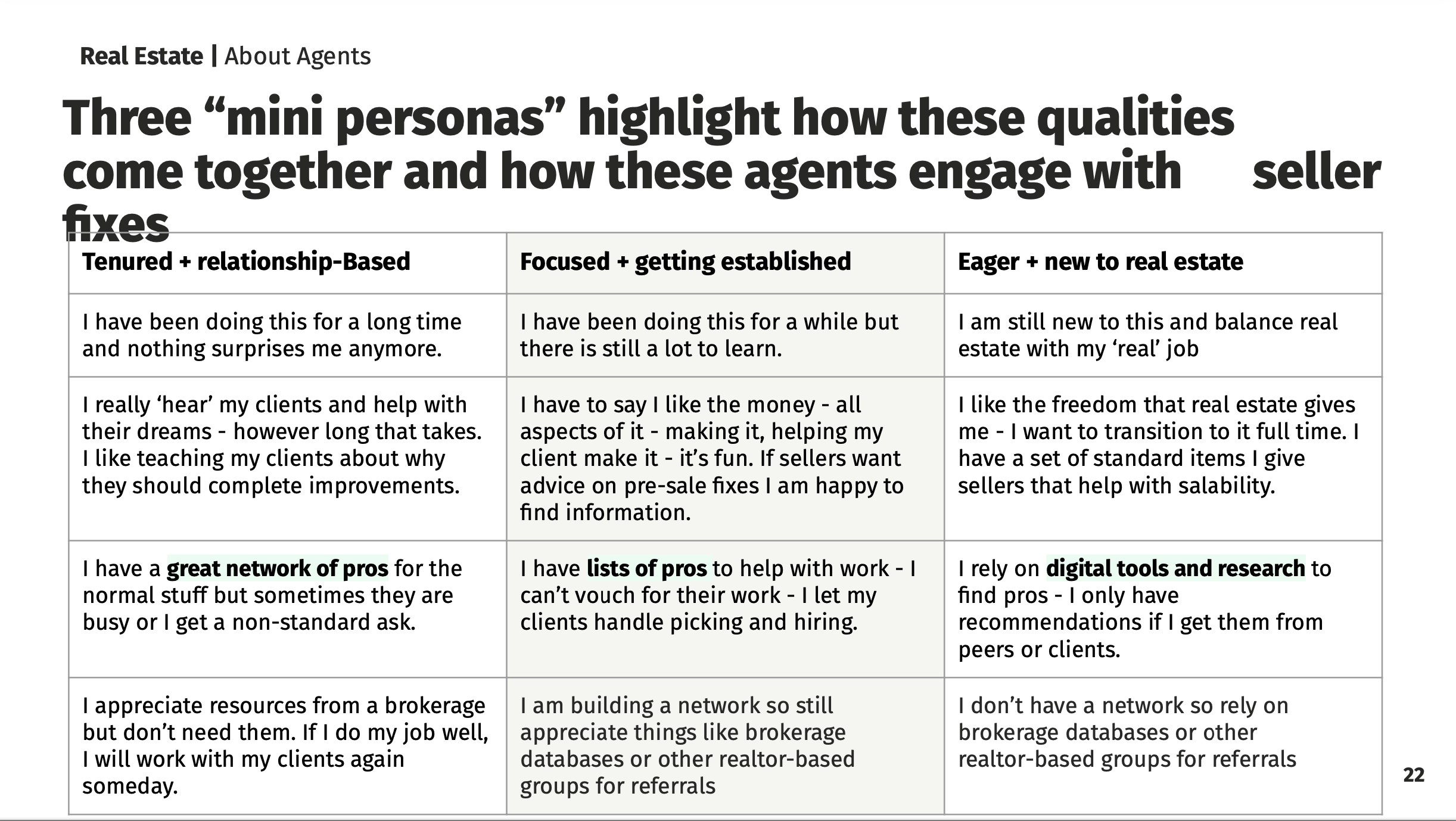
“Mini Personas”
Analysis and Synthesis
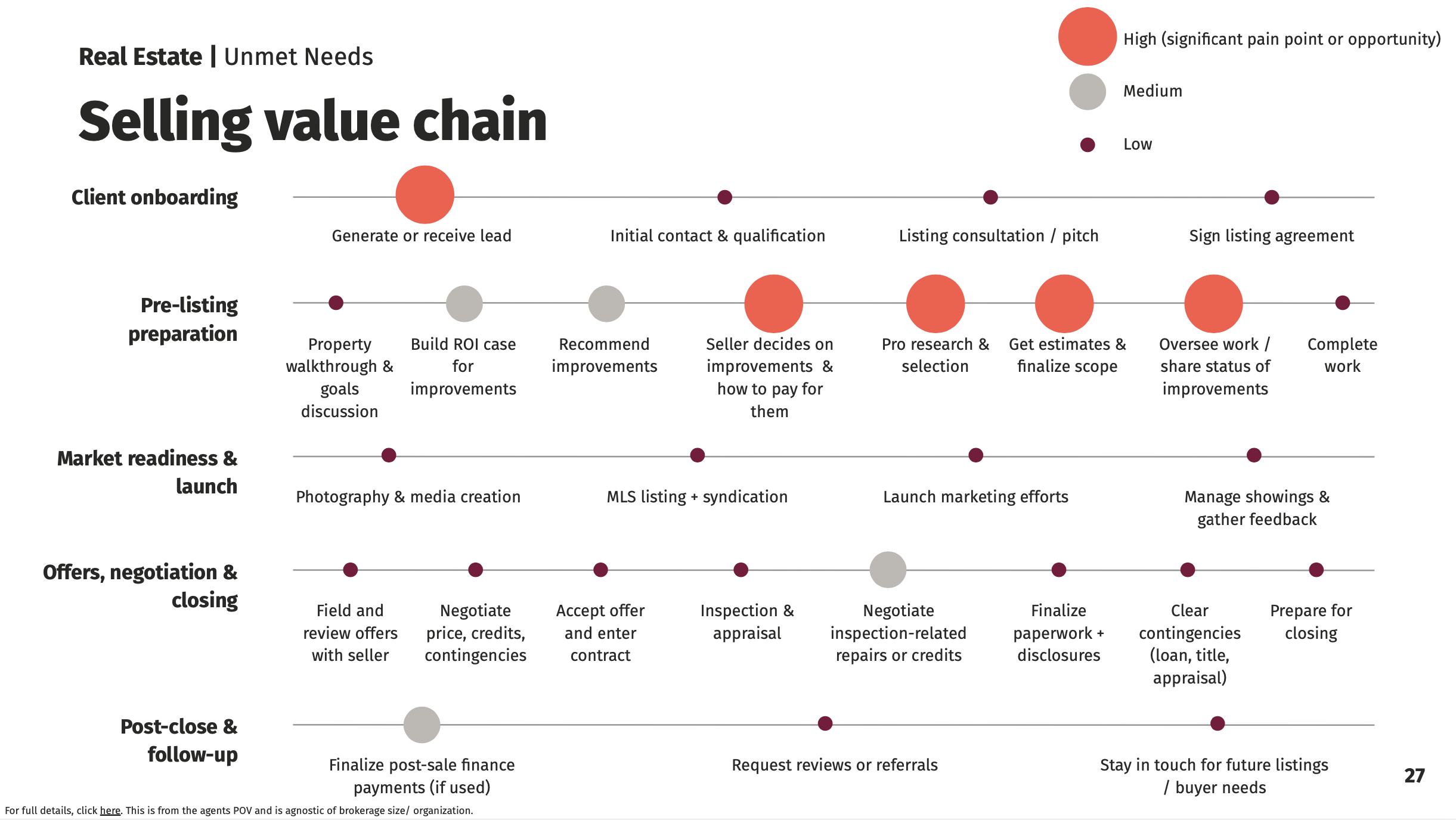
We mapped agent goals, seller constraints, and friction points across key stages:
Lead generation and client onboarding
Pre-listing preparation
Market readiness and launch
Offers, negotiations, and closing
Post-close follow up
Key Insights
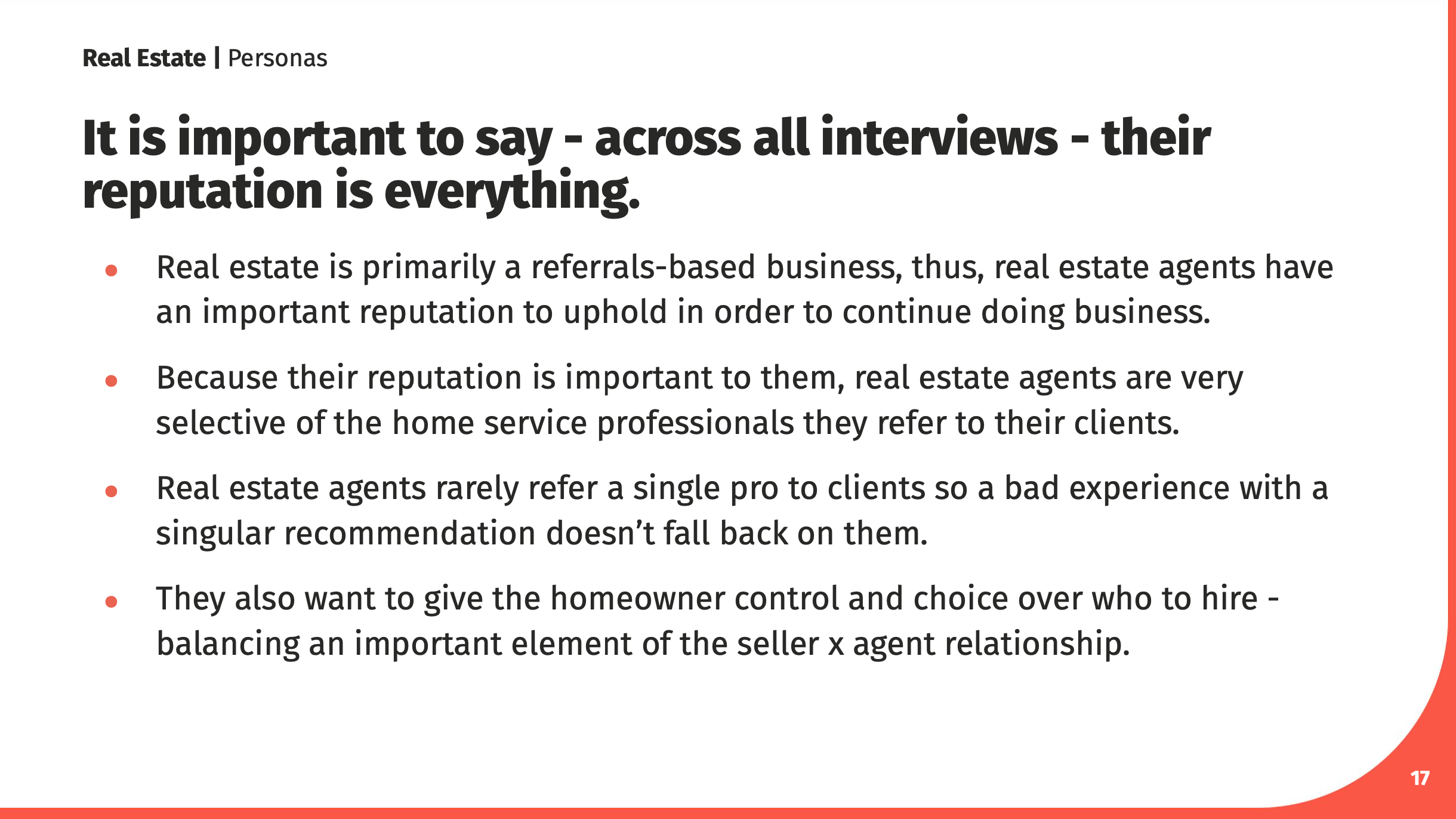
For real estate agents, reputation is everything. Agents are highly selective about referrals because poor service reflects directly on them.
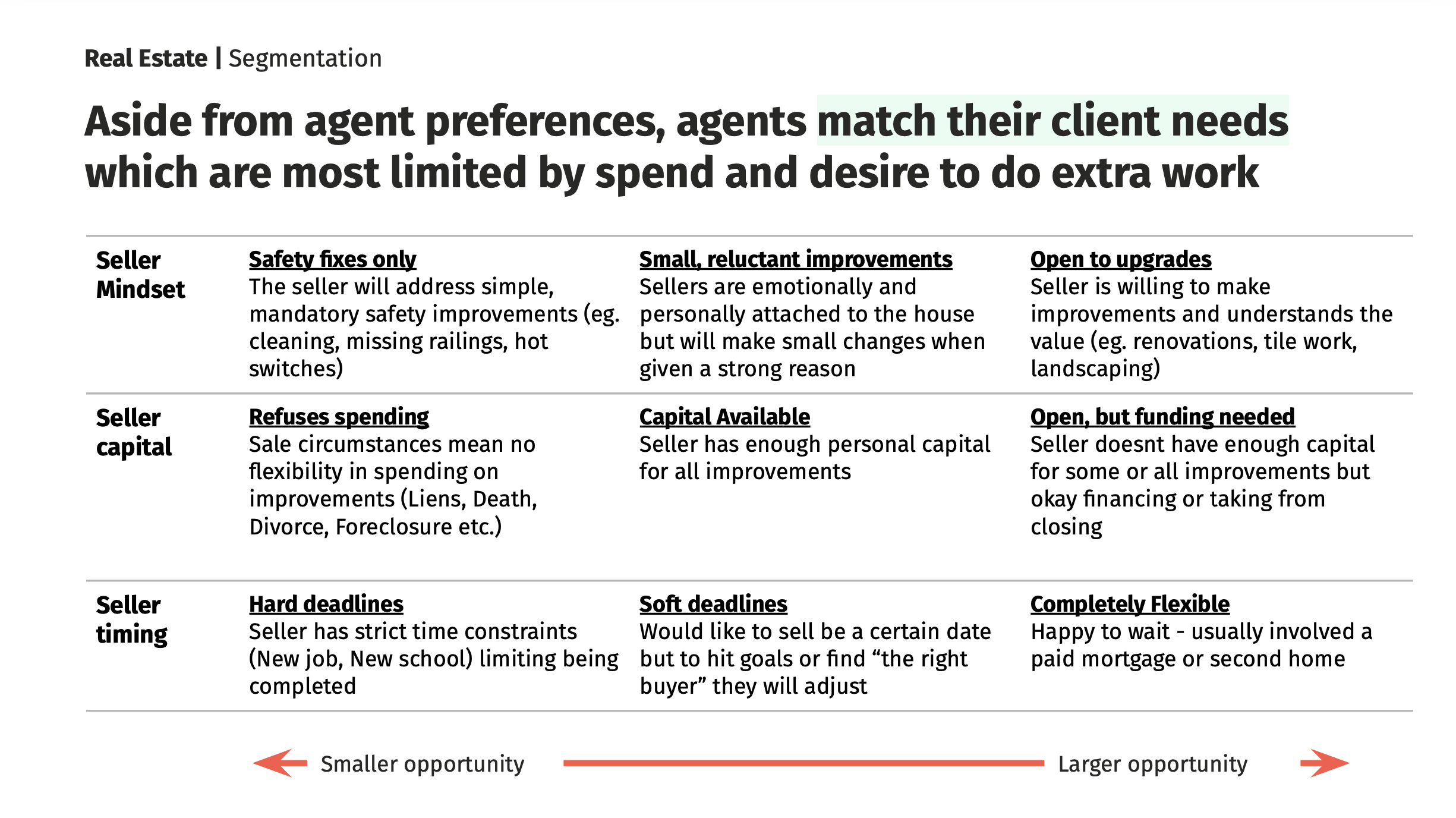
Agents match their client needs which are most limited by spend and desire to do extra work.
Pre-listing improvements present the largest opportunity, but sellers frequently lack capital, clarity on ROI or trusted contractor options.

Financing confusion and distrust significantly limit adoption of improvement programs.
Awareness of Angi’s RealVitalize program was extremely low, and agents expressed skepticism due to clear messaging around vetting, financing, and accountability.
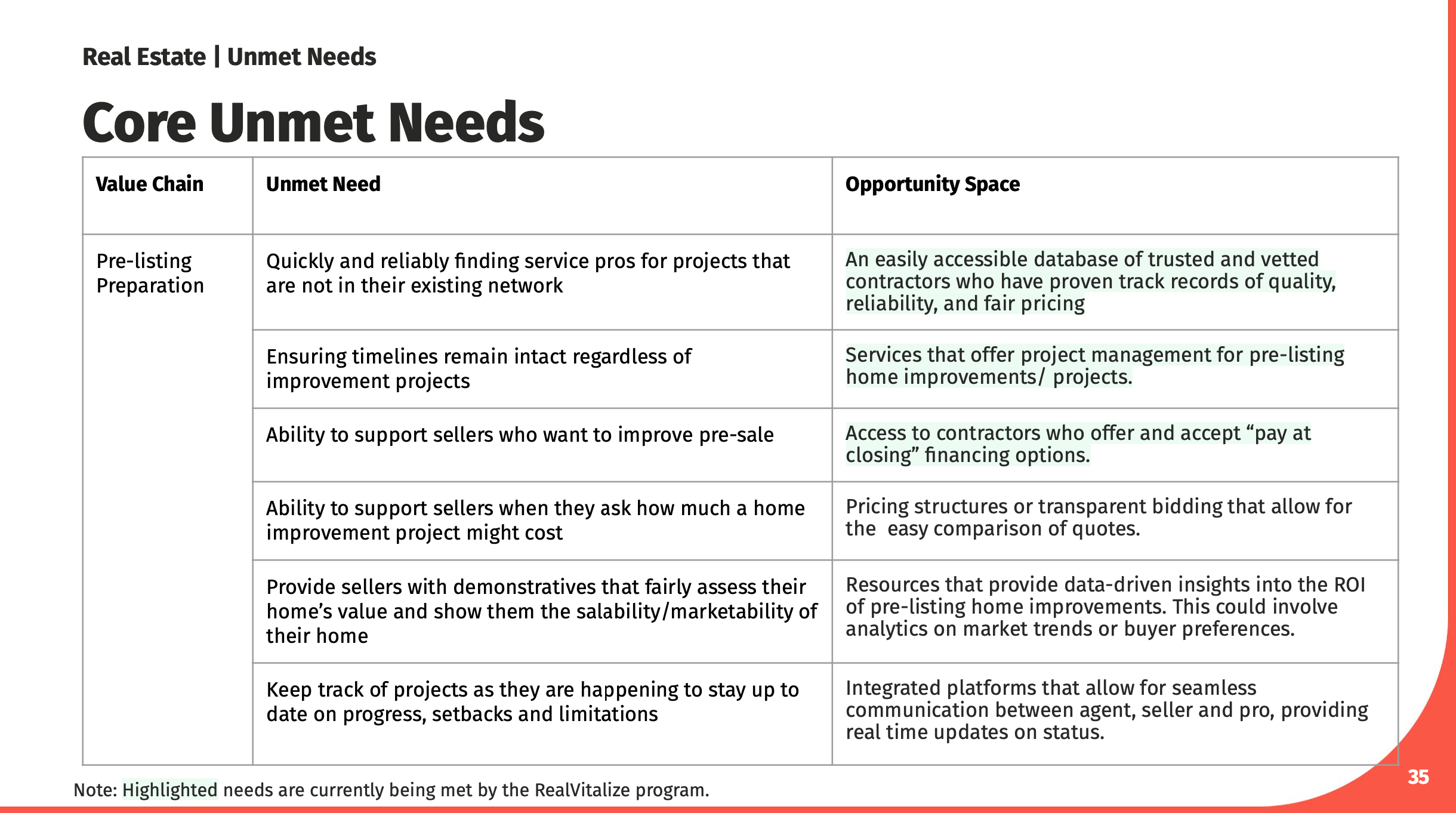
Six core unmet needs emerged, including access to vetted contractors, project management support, pay at closing options, transparent pricing, ROI data, and integrated communication tools.
Conclusion
This research surfaced a clear opportunity for Angi to support real estate agents not just as a referral engine, but as a trusted partner in pre-sale home improvements—provided trust, clarity, and reputation protection are prioritized.
The findings directly informed positioning and product strategy for RealVitalize, highlighting where Angi already delivers value and where additional clarity, tooling, and research are required. More broadly, this work established a foundational understanding of the real estate agent ecosystem and created a shared mental model across stakeholders for future roadmap decisions.
Reflections and Next Steps
This research directly shaped how we defined product success for RealVitalize—shifting the focus from program features to solving concrete agent problems across the pre-listing workflow. Rather than treating real estate as a single use case, the findings clarified where product investment would have the greatest impact, particularly around contractor discovery, financing clarity, and project coordination. This enabled teams to prioritize capabilities that reduce agent effort, protect reputation, and keep listings on schedule.
If this work continued, the next step would be to move from opportunity definition into product validation, starting with concept and usability testing of key workflows such as pro selection, pay-at-closing explanations, and project status visibility. I would also recommend launching targeted pilots tied to product KPIs—such as agent activation, time-to-project start, on-time completion, and repeat program usage—to ensure product changes measurably improve adoption, trust, and long-term value.