

Pro Competitor Research: A Competitive Landscape
My Role
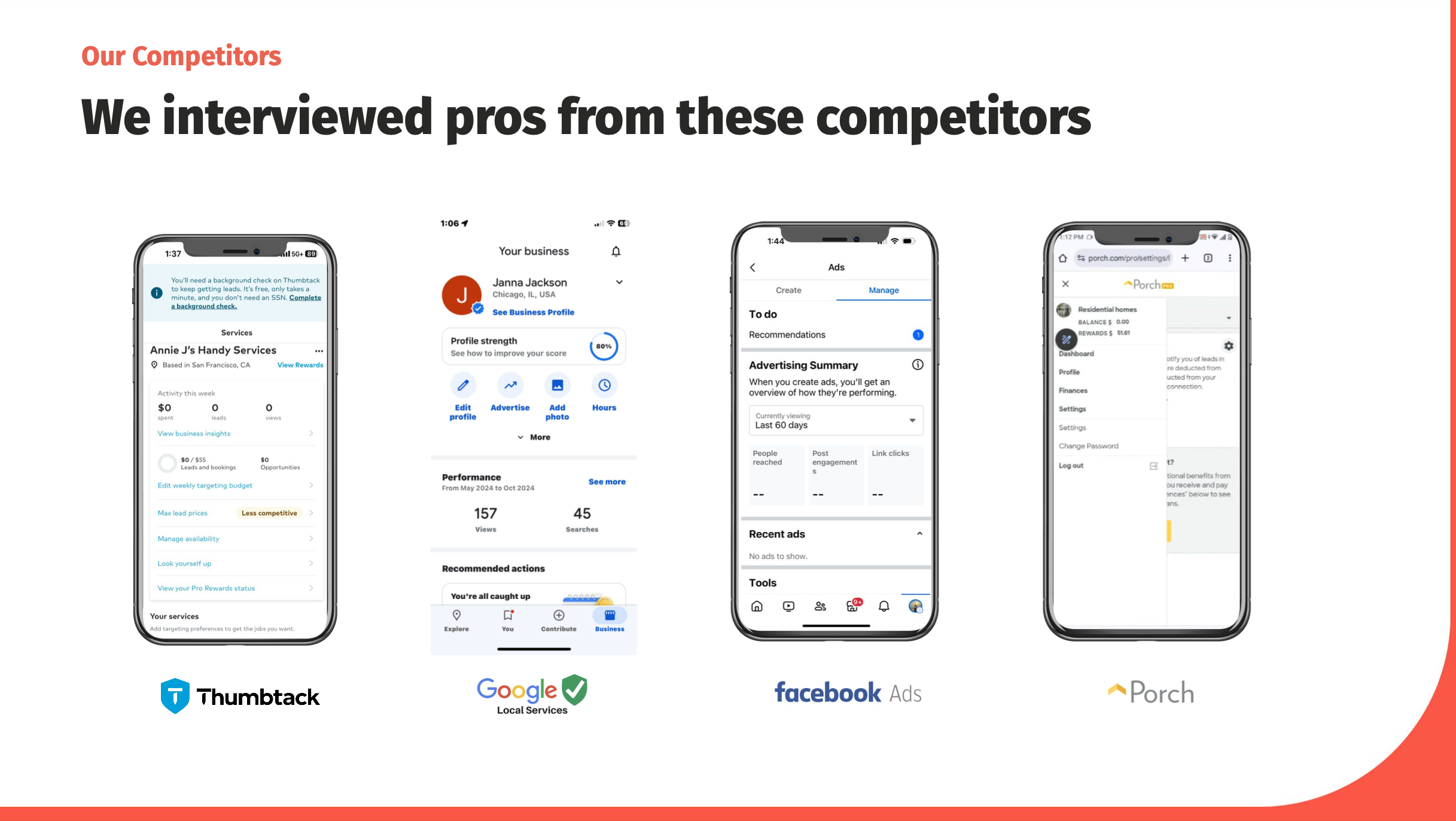
I led this research end-to-end with a strategic lens. My responsibilities included recruiting, conducting qualitative interviews with participants, synthesizing data, and analyzing the competitive landscape between Thumbtack, Google Local Services Ads, Facebook Ads, and Porch. This helped identify where Angi was under- or over-serving home service professionals (pros).
The Challenge
Home service professionals often rely on multiple platforms—such as Thumbtack, Google Local Services Ads, Facebook Ads, and Porch—to generate leads and sustain their business. While Angi competes in this space, there were significant gaps in understanding:
Why do pros choose certain platforms over others?
How do they actively manage lead volume, availability, and budgets?
Which features genuinely support their work versus create friction?
What expectations do competitors have already set for control, transparency, and flexibility?
Without this clarity, it was difficult to design pro-facing experiences that felt both competitive and indispensable.
The Process
Research Approach
I always begin my research projects by looking at existing research and doing a competitive analysis of the landscape. This helps me better understand what is already known, and where I need to focus. After doing a competitive analysis, I conducted in-depth qualitative interviews with seven owner-operator pros, each using one or more competitor platforms. Participants represented small businesses (1–5 employees) across a range of trades, ensuring insight into real operational constraints.
Methodology
Semi-structured interviews
Cross platform feature and flow comparison
Thematic synthesis across lead flow, budgeting, availability, and insights
Qualitative sentiment analysis to understand trust, frustration, and perceived value
Focus Areas
How do pros control lead flow (pausing, budgets, availability settings)?
How do competitors structure pricing and spend controls?
Which insights do pros find useful–and which do they ignore?
Where do competitors succeed or fail in transparency and trust amongst users?
Key Insights
Pros prioritize operational control over analytics. Most pros focus on winning and completing jobs, not analyzing dashboards—suggesting insights must be actionable, lightweight, and clearly tied to revenue.
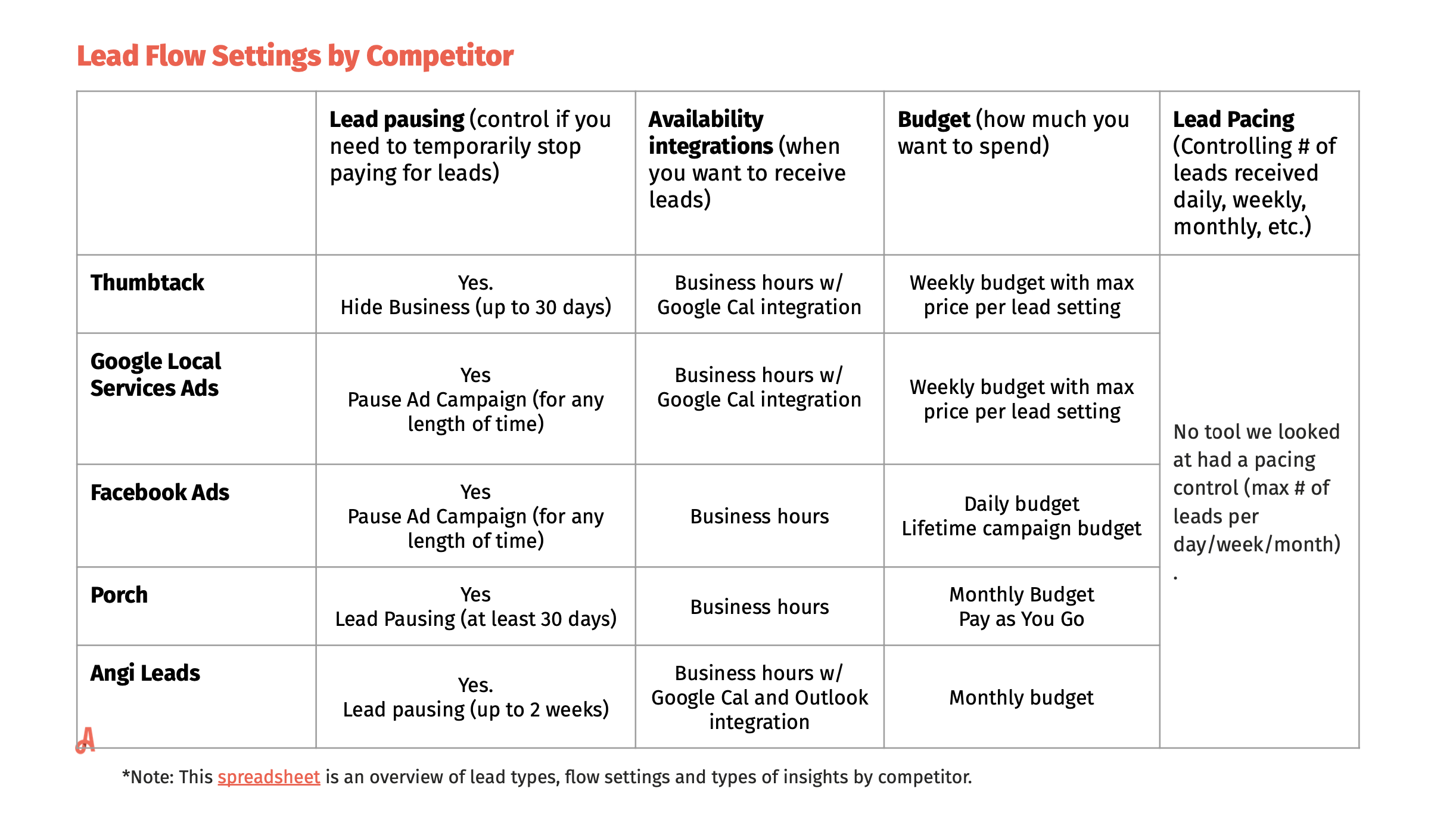
Budget and availability are primary levers for managing workload. Because no competitor offers true lead pacing, pros rely on indirect controls like budgets, max cost per lead, and calendar blocking.
Trust and transparency directly impact perceived lead quality. Features like verified leads, background checks, and easy credit requests increase confidence, while poor targeting or unclear sourcing erodes trust.
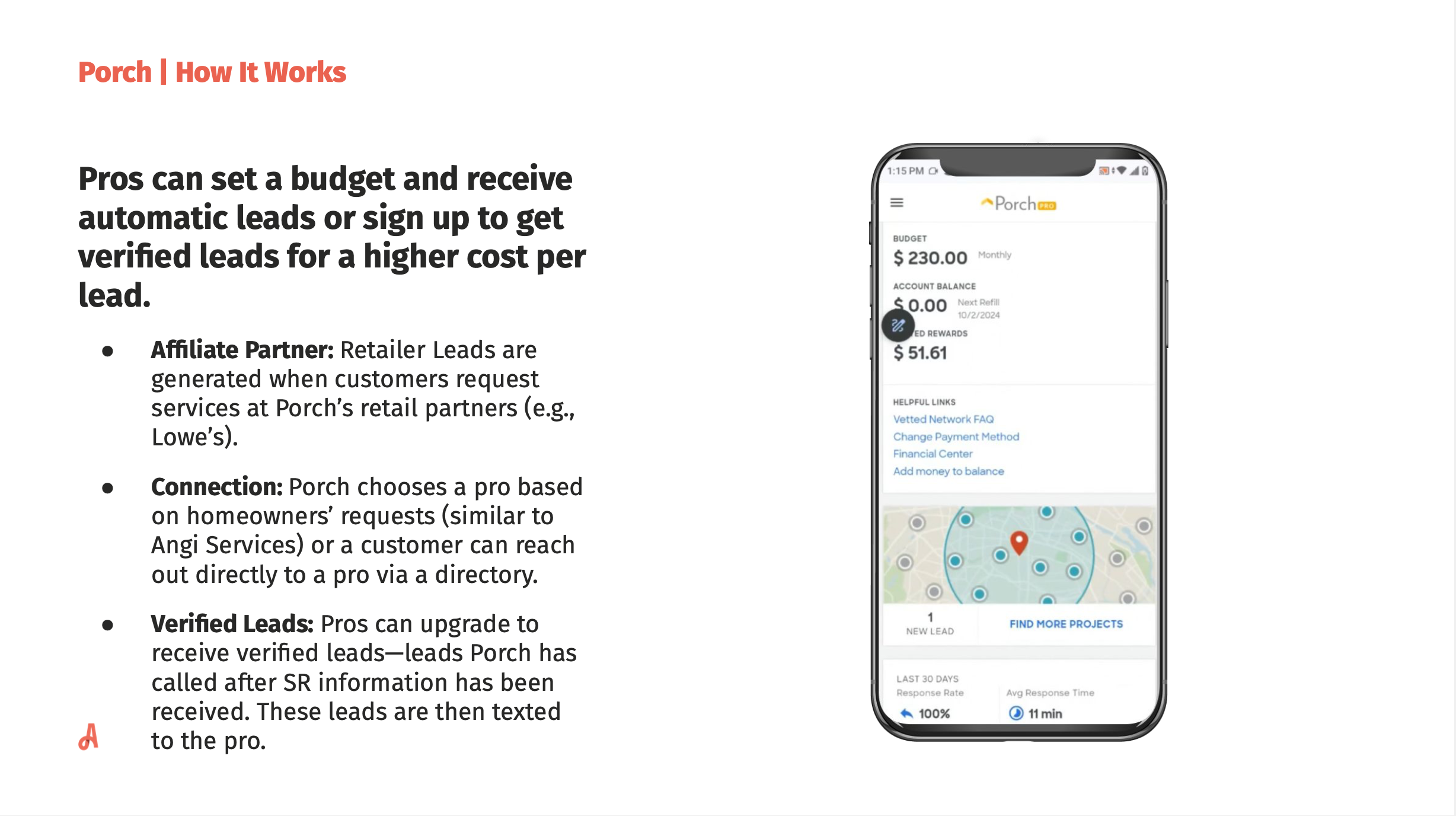
Competitors set strong expectations around flexibility. Pros expect to easily pause leads, adjust spend, and supplement income by adding adjacent tasks or zip codes during slower periods.
Conclusion
This research revealed that successful pro-facing tools are built less around sophisticated analytics and more around control, clarity, and flexibility. By understanding how pros actually manage their business across competitor platforms, this work established clear principles for improving Angi’s pro experience—particularly around lead management, transparency, and workload control.
The findings informed strategic conversations about how Angi could better meet pros where they are, differentiate from competitors, and design a Single Pro Product that feels both practical and indispensable in a pro’s daily workflow.
Reflections and Next Steps
This research directly influenced how we framed success for Angi’s pro-facing experiences—shifting focus from adding features to enabling clearer control over lead flow, spend, and availability. By grounding competitive insights in real pro workflows, the team was able to prioritize capabilities that reduce operational friction and increase confidence, rather than investing in analytics or tooling that pros are unlikely to engage with.
If this work continued, the next step would be to translate these opportunity areas into concept testing and usability validation, particularly around lead pacing, transparency, and workload control. I would also pair qualitative findings with behavioral data from Angi pros to quantify impact and validate which strategic bets most meaningfully improve adoption, satisfaction, and retention.